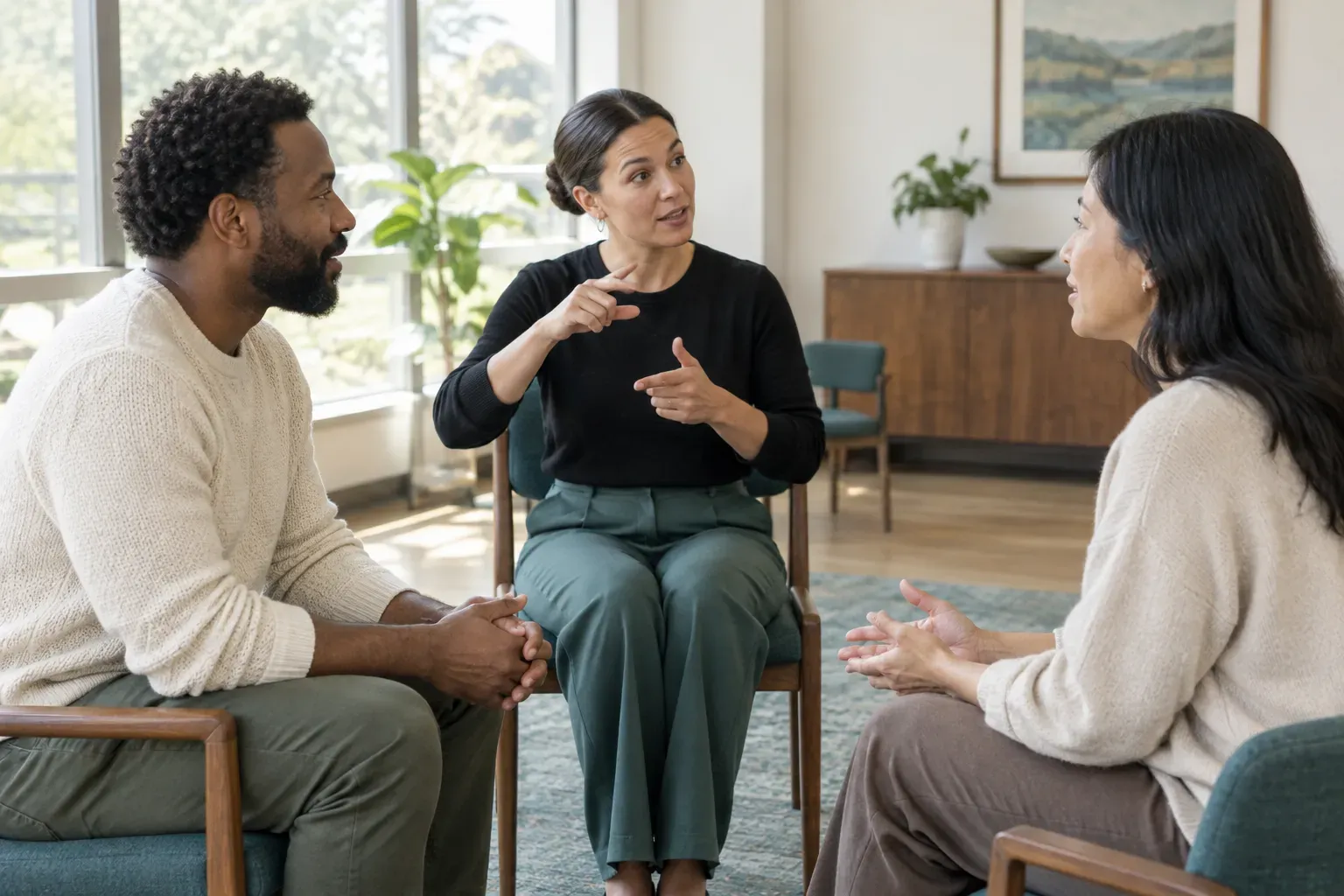
Sign language interpreting, shaped around the conversation.
Gina Sentz is a certified American Sign Language (ASL) interpreter. She serves individuals and small to medium sized companies in Manassas, Virginia and across the communities listed on the Service Areas page. Discuss interpreting for appointments, staff meetings, onboarding, training and presentations.
What interpreting supports
A sign language interpreter carries meaning between people who use a signed language and people who use spoken language. Each side speaks in its own language and each side is understood directly.
The work covers more than words. Tone, pauses and who is speaking all shape a conversation, and a good interpreter keeps the exchange flowing so participants can focus on each other.
Because signed communication is visual, the setting is part of the service. Participants need a clear view of the interpreter and of one another.
Planning a conversation
Start with the people. Who will be in the conversation, and how many? A pair has different needs than a table of six, and a larger group benefits from a clear order for taking turns.
Then consider the place. A room where chairs can curve toward one another makes it easier to follow. Steady light on the interpreter helps, and a quiet background lets eyes stay on the signing.
Finally, think about pace. One speaker at a time lets each message come through whole. Short pauses help the interpreter finish before the next person begins.
Choose the page that matches your question.
Explore group conversations, one to one exchanges and presentations, or find guidance on coverage and preparing an inquiry.
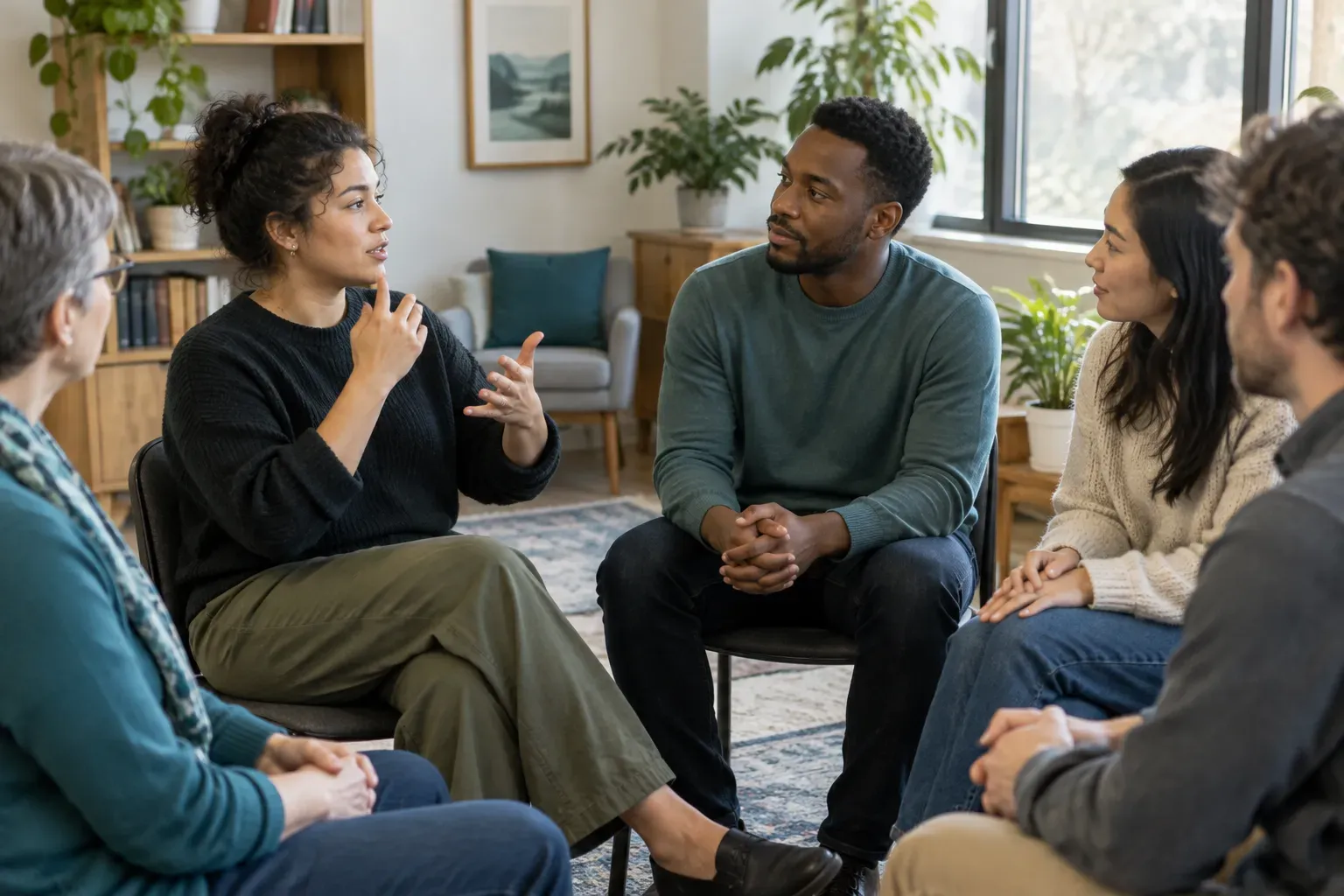
Group conversations
Interpreting for staff meetings, onboarding and training where several people need to follow the discussion, ask questions and share information.
Read more
One to one exchanges
Interpreting for individual appointments and personal meetings, helping participants exchange detailed information and ask questions directly.
Read more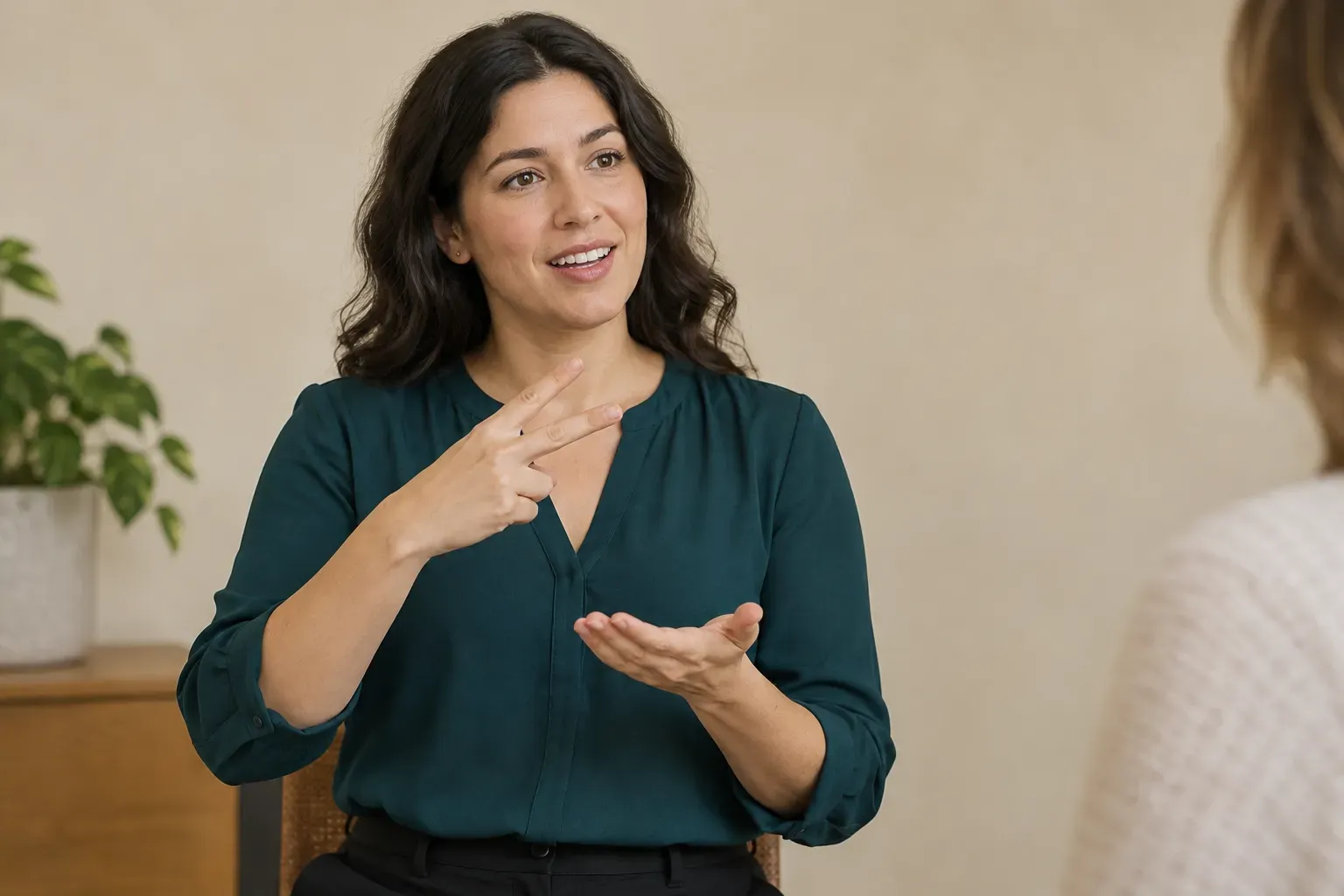
Presentations and large audiences
An interpreter signing alongside a presenter so Deaf audience members can follow the talk and take part in questions, with planning for lighting, sightlines and slides.
Read more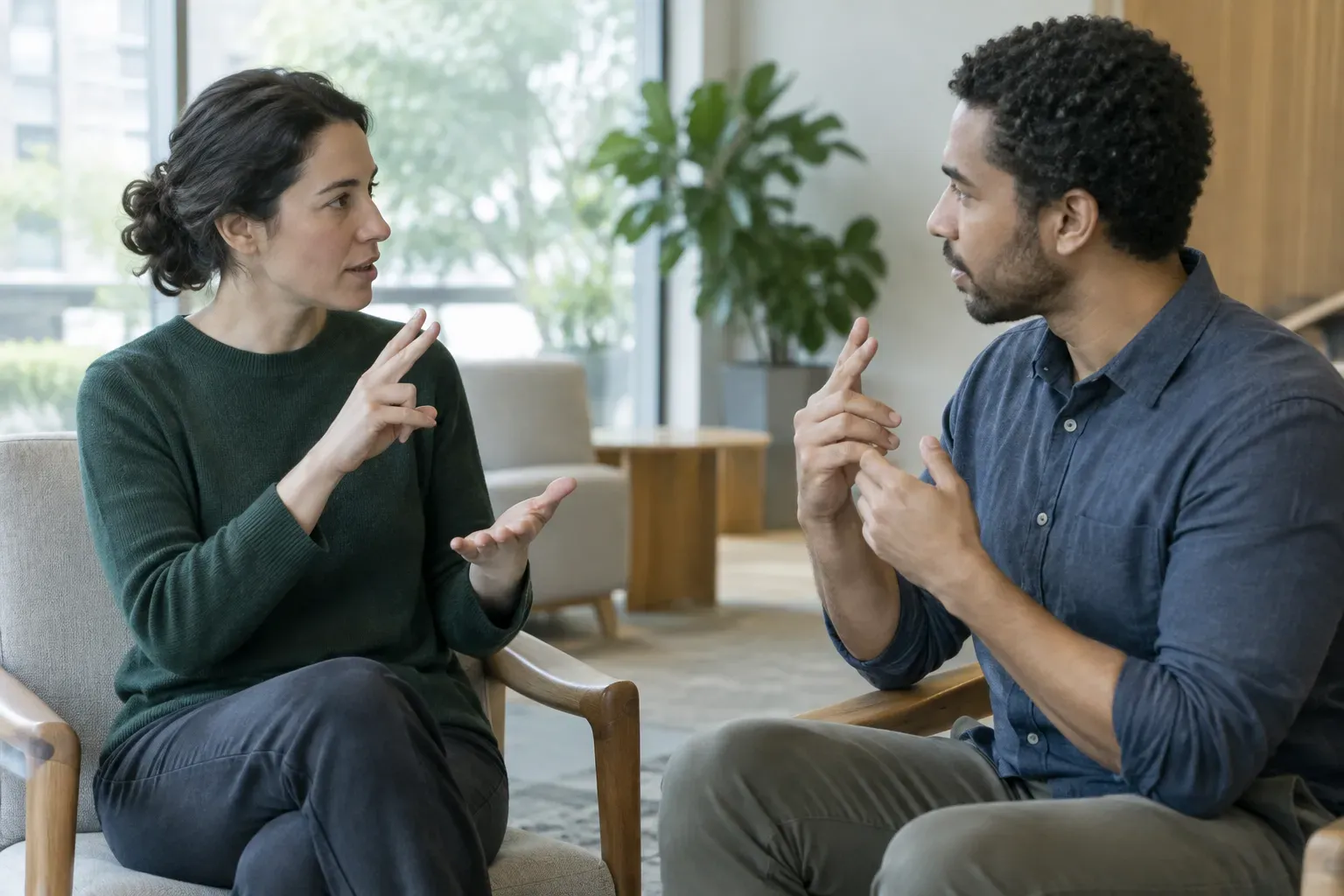
Communities covered
Manassas is the home base, with a wider list of Virginia communities from Manassas Park to Winchester.
Read more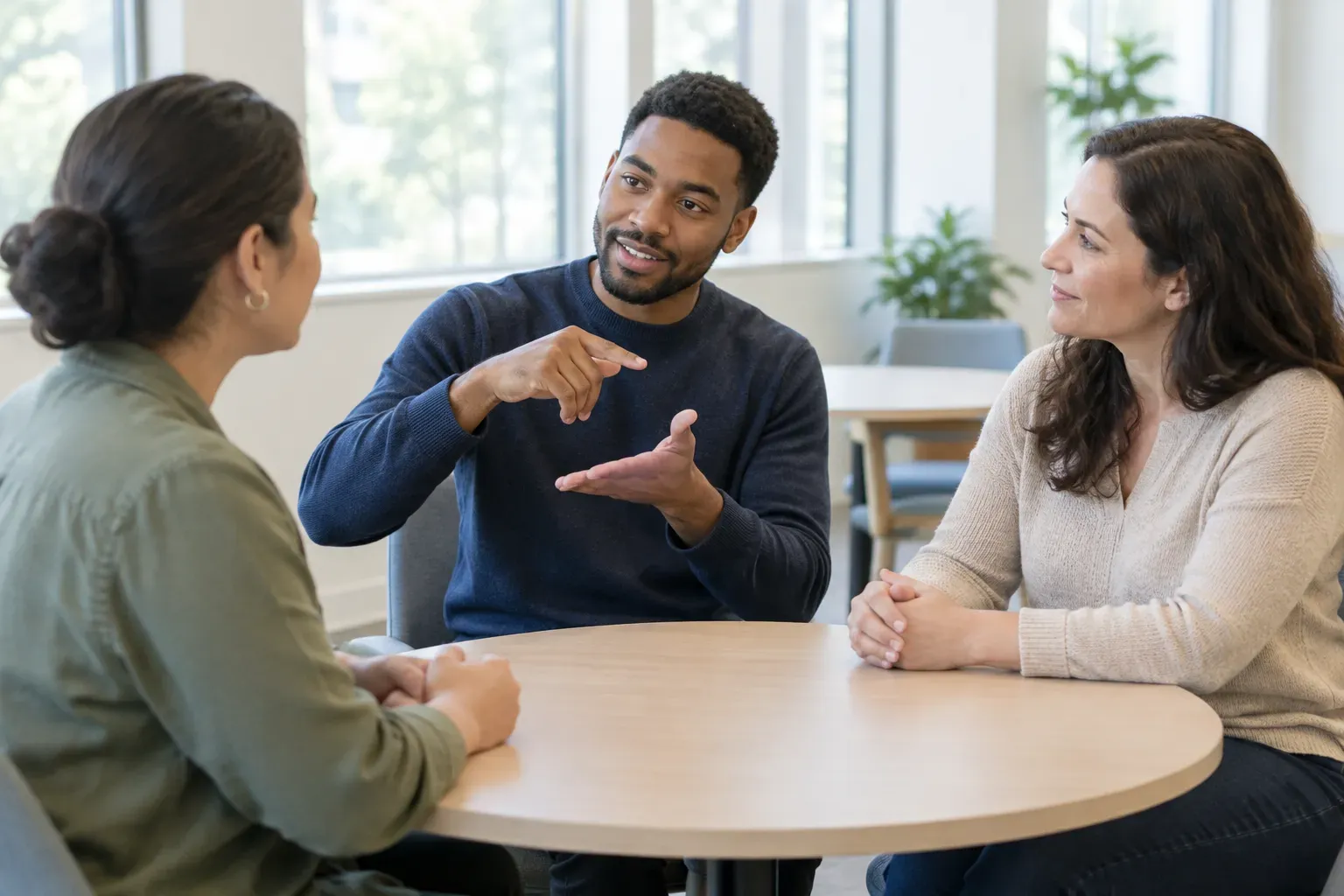
Preparing to reach out
Email or call Gina to discuss your request. Gather the date, location, duration and participant details for an appointment or business event.
Read moreBuild a setting people can follow.
A round or curved table works well for small groups, since everyone sees everyone. If the group is larger, give the interpreter a spot near the speaker so people can glance between the two without turning far.
Remind participants to wait for the interpreter to finish before replying. That small habit keeps overlap down and helps every person feel heard in turn.
For more practical points, read the frequently asked questions or look at the communities on the Service Areas page.
Have a conversation to plan?
Visit the Contact page to prepare your inquiry.